


Explore the art of Taichi and Qigong through stories, tips, and community updates. Find guidance, inspiration, and practical advice to deepen your practice and connect with others on the journey.
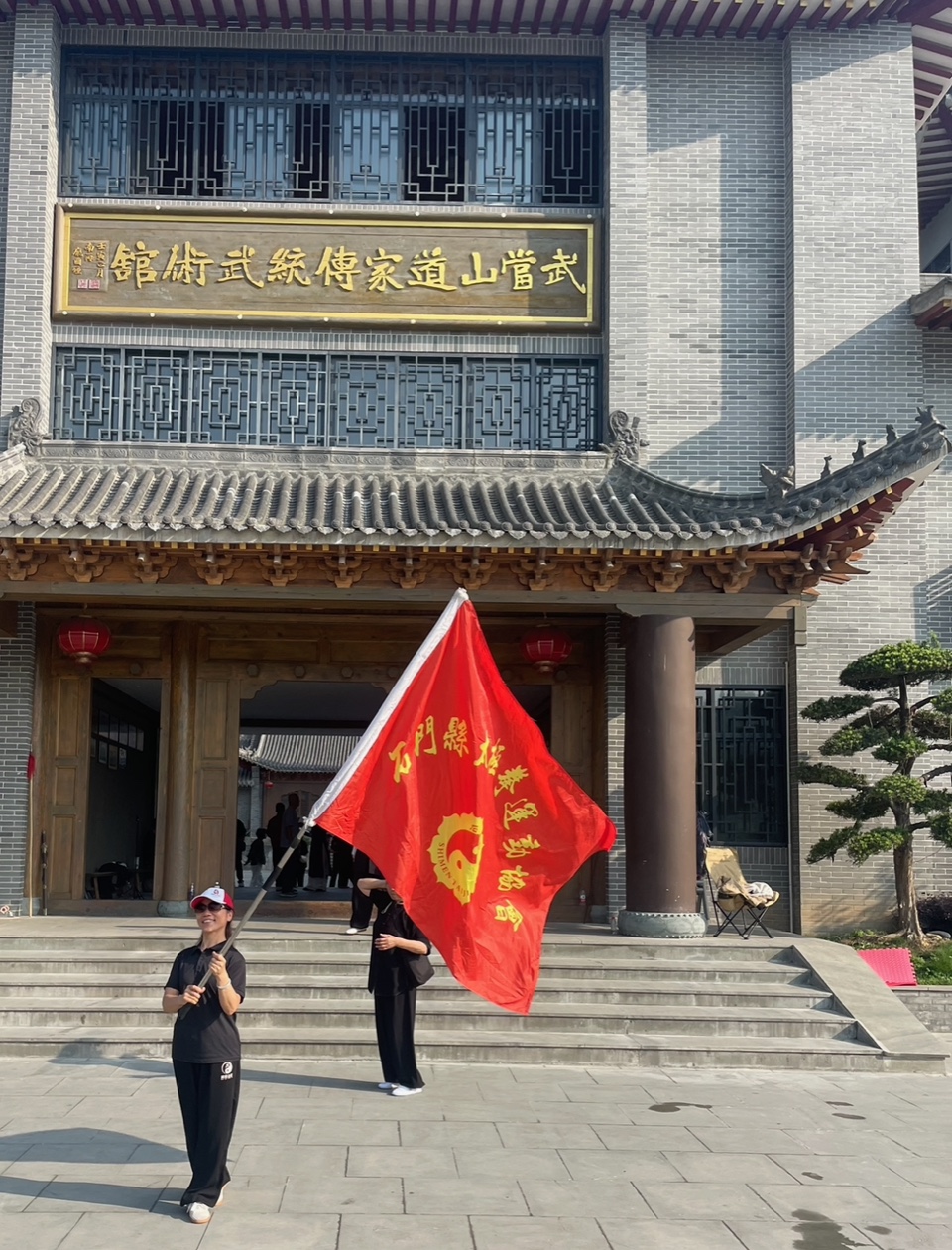
In May 2024, I arrived at the Wudang Traditional Taoist Kung Fu Academy to begin training.
I had travelled from the Surf Coast to the Wudang Mountains in Hubei Province, China, but the journey began years earlier when a friend introduced me to Adam Martin from Five Elements Martial Arts in Torquay. Adam convinced me to give Taijiquan a go.
At the time I was doing a lot of dynamic bodyweight training at the gym and practising yoga to stay fit and strong for my surfing. The softness and choreography of Taijiquan were unlike anything I'd experienced before. It was the complete opposite of the way I normally trained.
I really enjoyed the warm-ups where we began with stretching and loosening exercises that worked progressively from the feet right through to the head. We learnt Qigong, with its roots in Traditional Chinese Medicine, and Taijiquan, which literally translates as “Supreme Ultimate Fist.”
What really drew me in was the structure, the discipline and the practice. I found it incredibly grounding and incredibly challenging... and, to be honest, nine years later, I still do! That's one of the things I love most about it. No matter how long you've been practising, there's always another layer to discover.
In 2018, Master Yuan Xiu Gang's new school was being built, and he travelled to Australia to introduce the academy to an international audience. During that visit, he came to Torquay to run a workshop with Five Elements Martial Arts.
I still remember watching his demonstrations. They completely blew my mind. His flexibility, coordination and effortless movement were unlike anything I'd ever seen before—apart from in Kung Fu movies. It was hard to believe someone could move like that in real life.
A few years later, when I decided to take my Taijiquan and Qigong training further, Adam suggested I travel to Wudang and train with Master Yuan at the Wudang San Feng Sect. Looking back, it was one of the best decisions I've ever made.
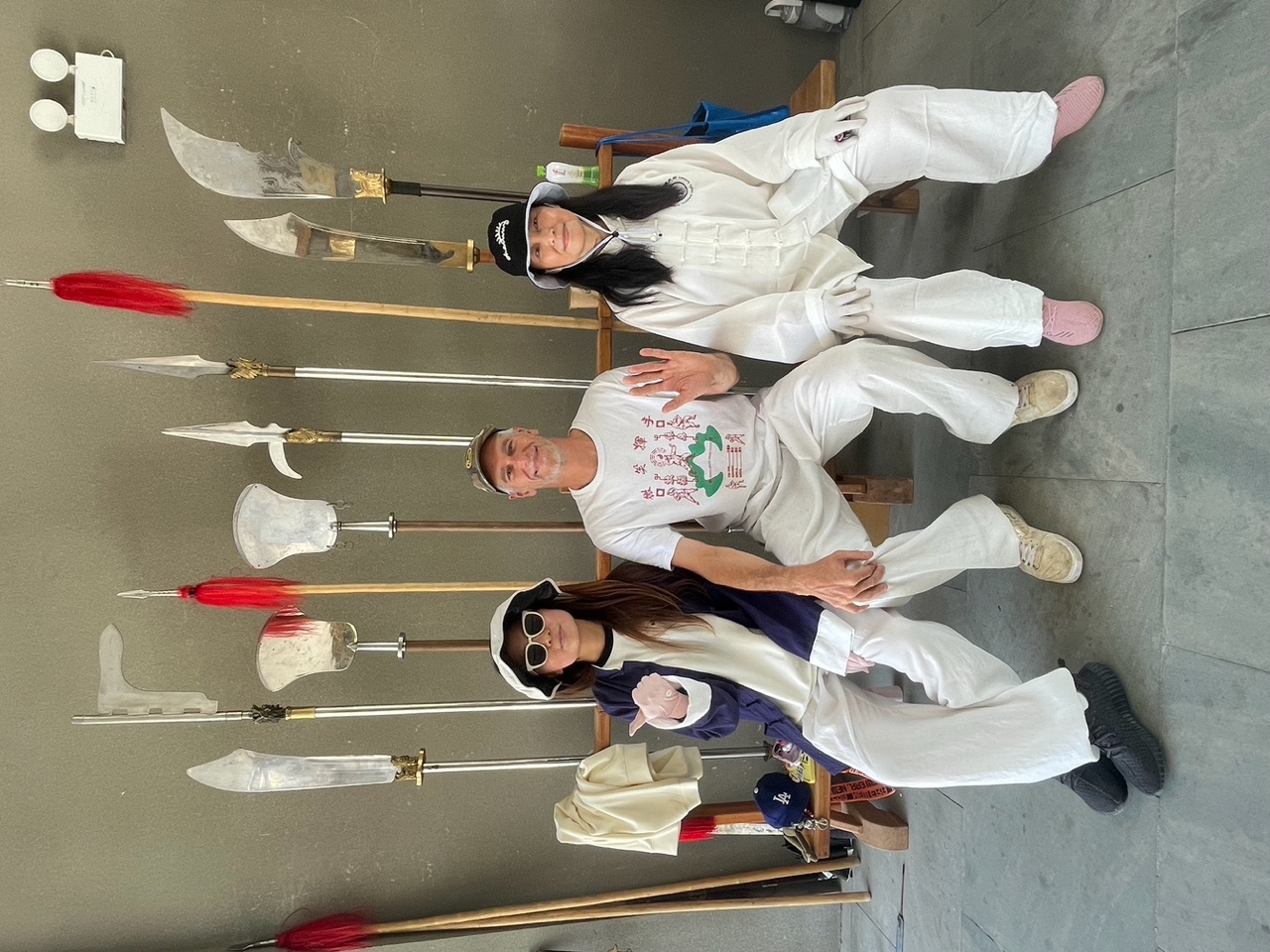
The academy is located just outside Wudang Town on the road leading into the mountains. It's a purpose-built martial arts school where students can stay anywhere from two weeks to several years.
Students are part of daily life at the academy, helping with chores, cleaning, maintaining the grounds and assisting in the kitchen.The academy can accommodate around 300 students, most of them Chinese, ranging from young children through to adults.
During my stay, I trained alongside a small group from Wudang Spain, as well as students from France, Hong Kong, South America and other parts of Europe. Despite the different languages and cultures, everyone shared the same goal—to learn, improve and support each other. I especially miss the quiet times, sitting around talking and laughing with my kung fu brothers and sisters.
The atmosphere was friendly, respectful and surprisingly relaxed. Surrounded by the mountains, it was easy to understand why Daoism developed in such a peaceful place.
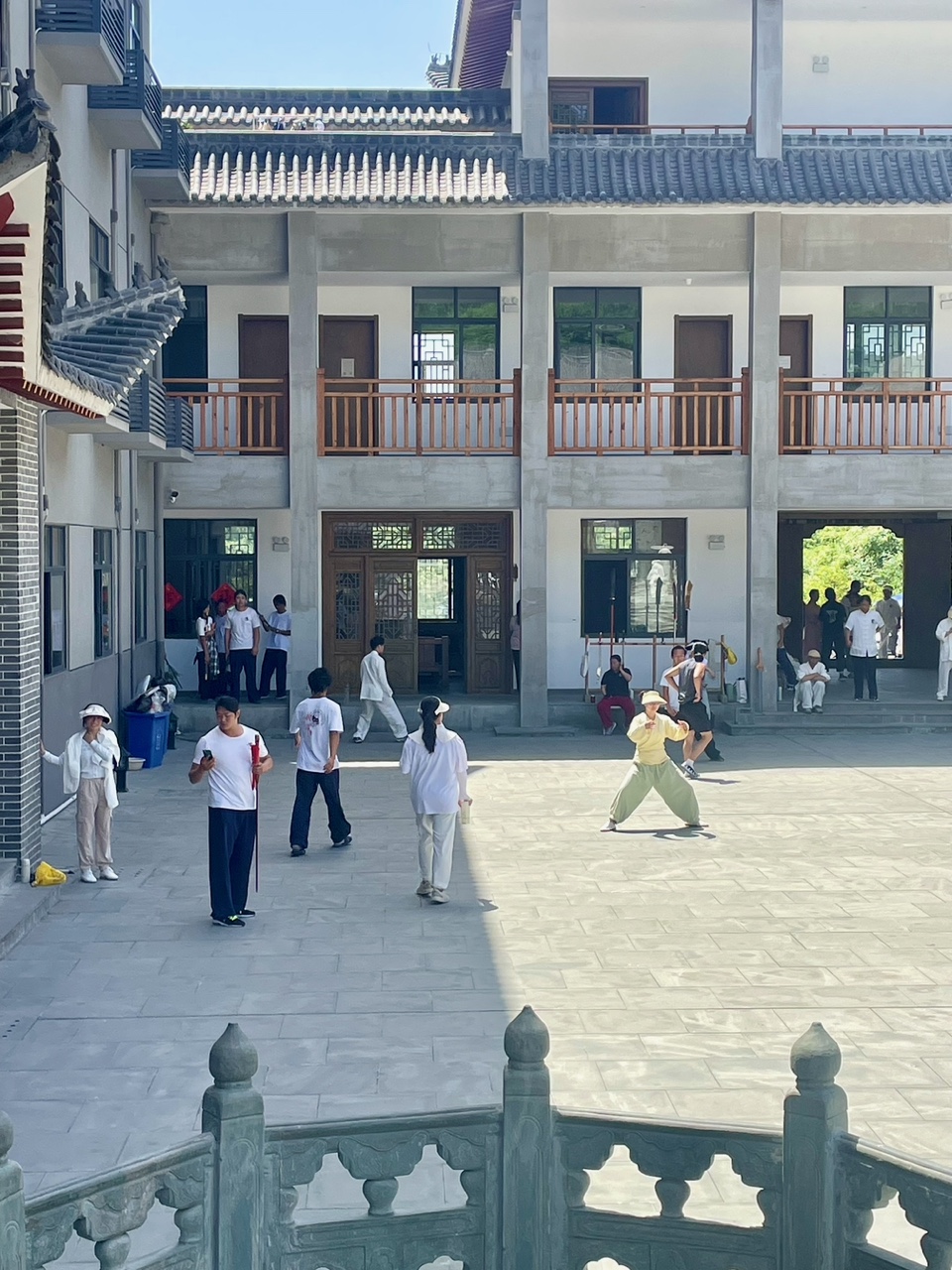
6:00 am – Five Animals Qigong
7:00 am – Breakfast
9:00 am – Wudang Kung Fu Basics
10:00 am – Taijiquan
11:30 am – Lunch
12:30 pm – Siesta - Tea
2:00 pm – Kung Fu Basics
3:00 pm – Taijiquan
5:00 pm – Dinner
6:00 pm – Meditation
The days were full, but they had a beautiful rhythm of good food, plenty of training and time to rest—a chance to slow down.
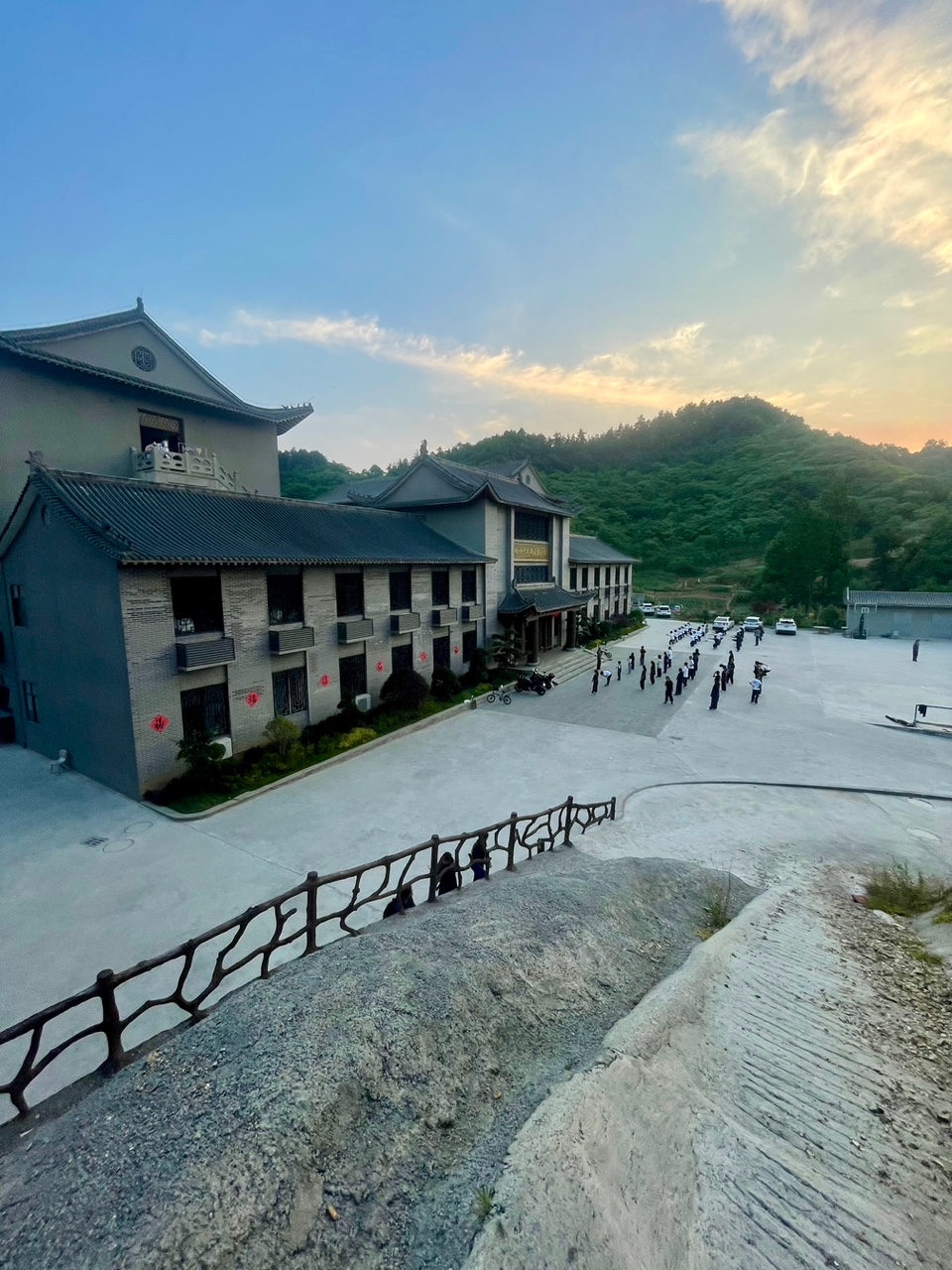
The academy offered much more than Taijiquan. Around me, students were learning internal and external martial arts—xingyi, bagua, staff, sword, fan, multiple empty-hand styles, calligraphy. five element- yin yang theory and traditional Chinese musical instruments.
After the second week, I noticed something changing. My body started to soften. I felt lighter, more coordinated and much clearer in my mind. It's difficult to explain, but it felt like my body was returning to a more natural way of moving.
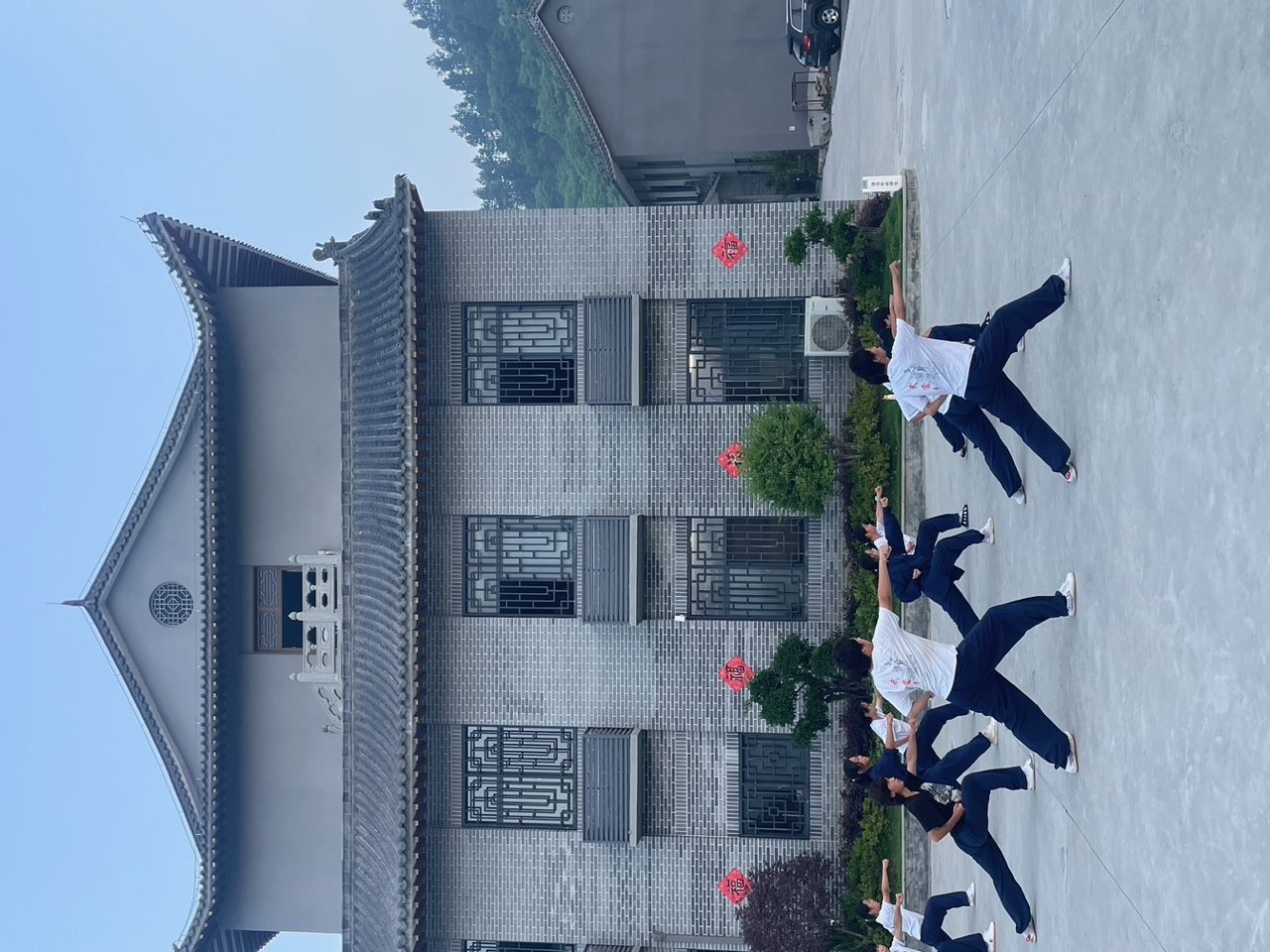
One of the things that struck me most was how peaceful the academy felt. Even though hundreds of people were training every day, it was never quiet. There was the rhythmic stamping of feet, instructors calling out in Chinese, and the ringing of swords and other training weapons. Yet despite all the activity, there was a calmness about the place. Everyone was there to improve themselves, and that created a really positive atmosphere.
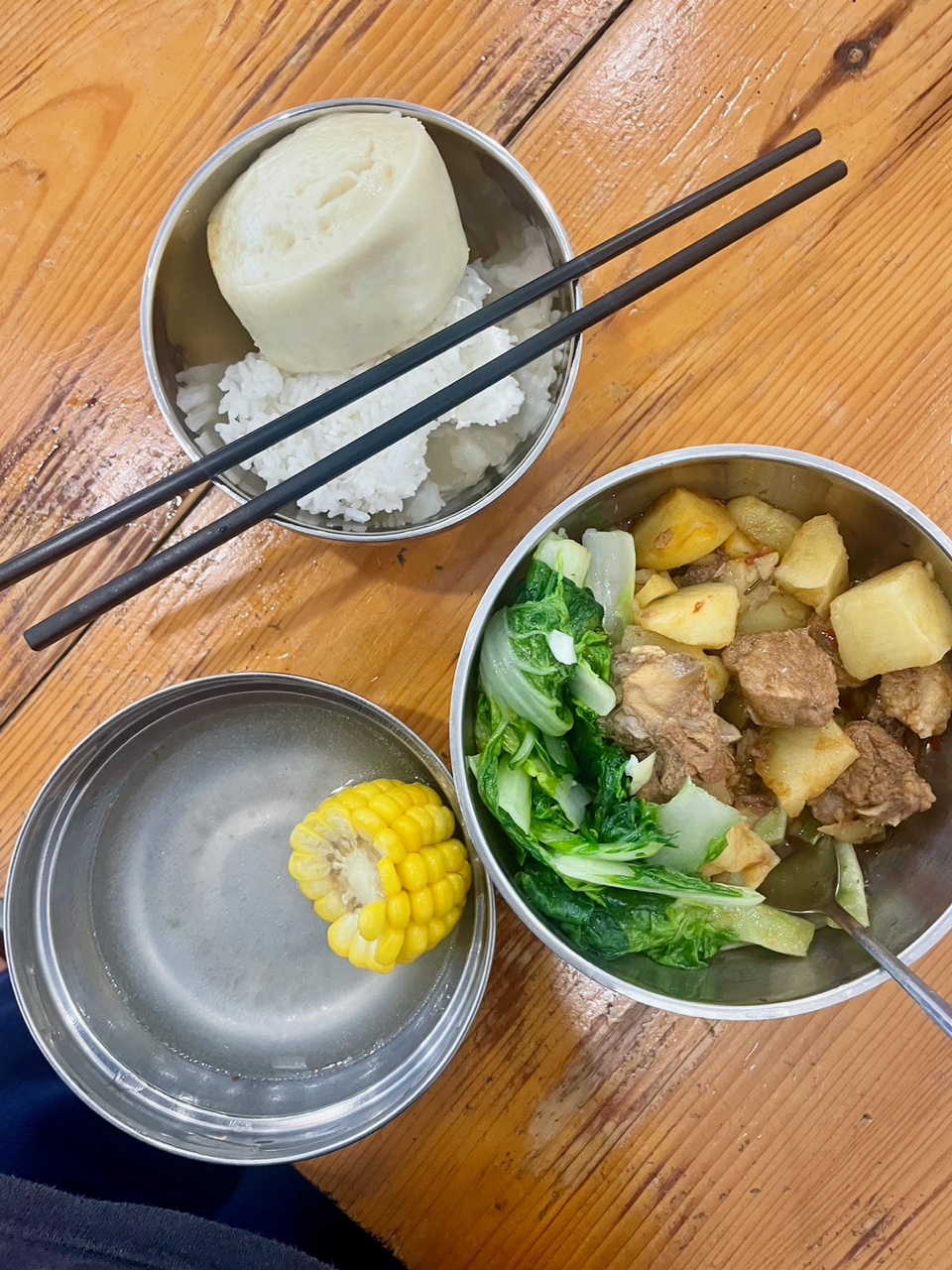
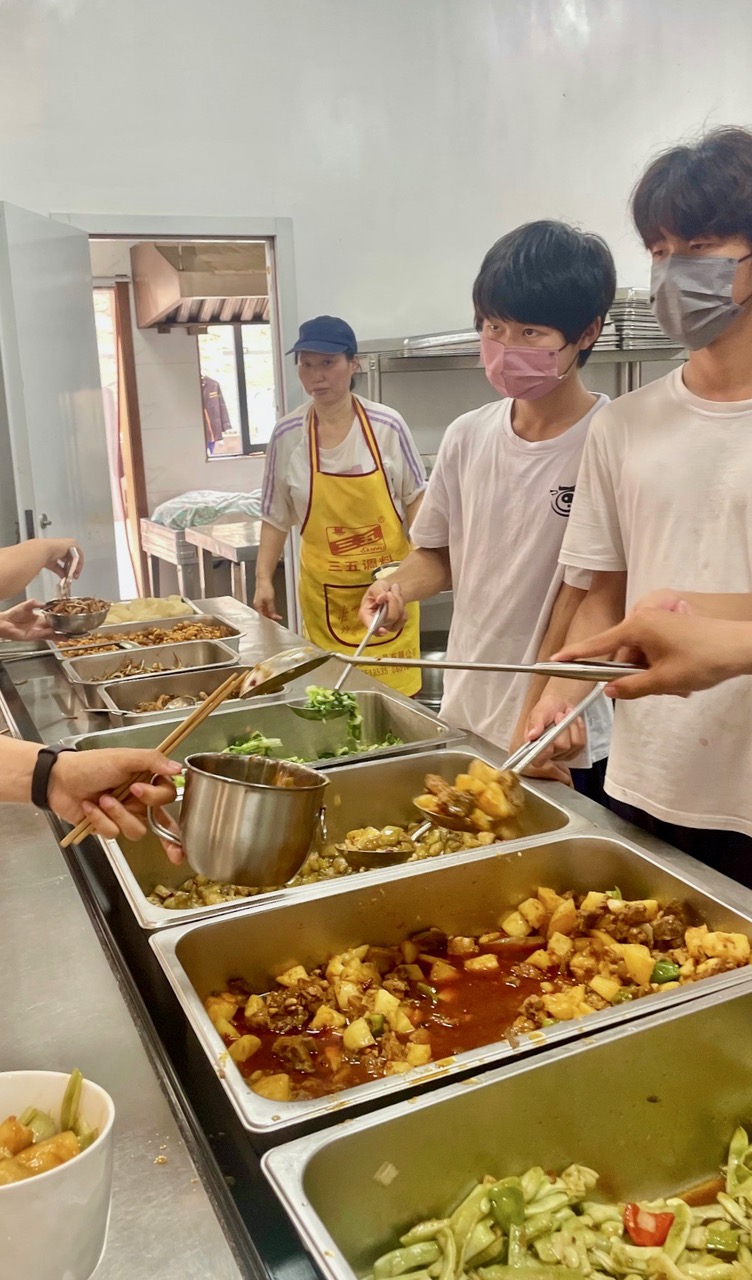
The food was another highlight. Simple, nourishing Chinese meals with plenty of vegetables, tofu, rice and meat—exactly what you needed after a full day of training.
Like everything else at the academy, there was no fuss. Just wholesome food shared with people from all over the world.
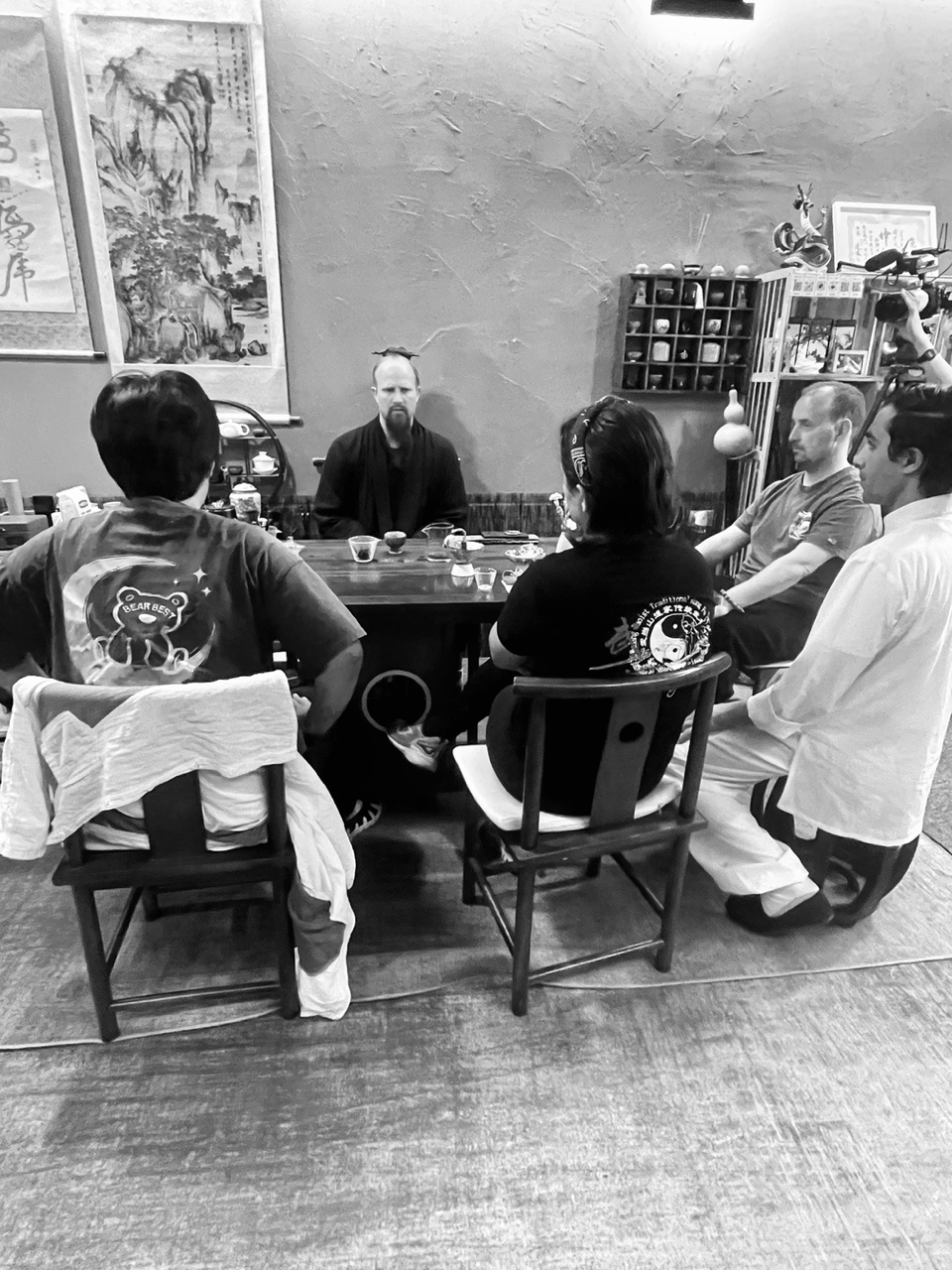
One of the highlights of my trip was meeting Jake Pinnick from Ways of Wudang, one of Master Yuan Xiu Gang's disciples.
On Wednesday afternoons, Jake hosted informal Tea Talks where students gathered over tea to discuss Daoism, Yin and Yang, the Five Phase theory, and how these ideas relate to everyday life.
During the day, most of the training was taught in Chinese, so you learned by watching, feeling and repeating. Jake's ability to explain the philosophy in English helped connect everything together. Suddenly the movements took on a much deeper meaning.
When I returned to Wudang the following year, I continued my training with Jake, who is now my Shifu.
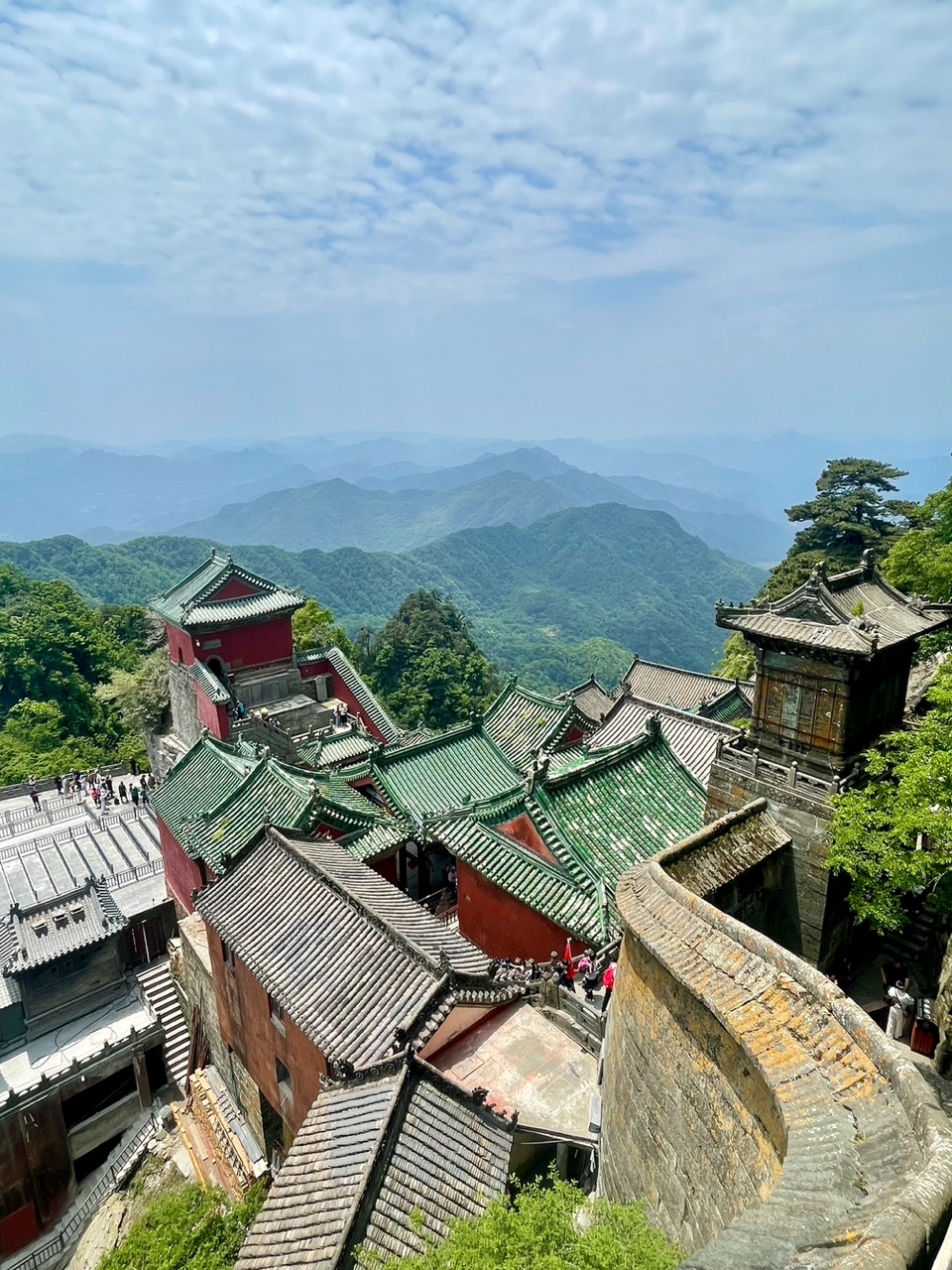
Looking back, my first trip to Wudang was about much more than training, conditioning and learning Taijiquan forms. It was my introduction to Daoist culture and a completely different way of looking at the world.
It's now been two and a half years since that trip, and I can honestly say it has had a profound effect on me mentally, physically and psychologically. It's the small things that remind me—drinking tea from a gaiwan instead of a mug, choosing rice instead of pasta, slowing down a little, and paying more attention to nature and the rhythm of everyday life.
The lessons I learned continue to influence the way I practise, teach and live today. I was completely captivated. Before I even came home, I knew I'd be back.
Looking back, that first journey didn't just change the way I moved—it changed the way I see the world.
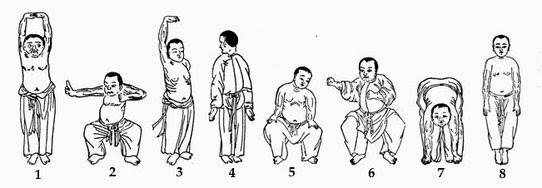
Baduanjin is series of qigong exercises, thought to be used from as early as 1100AD. The physical stretching movements stimulate the flow of Qi through the meridians, improving strength and flexibility of the entire body. It is practiced to improve health, and to calm and heal the mind, body and spirit. Practising Baduanjin allows for the correction of physical and yin yang energy imbalances, and the releasing of emotions and reducing stress. It is known for its simplicity and effectiveness.
Each of the eight separate exercises focus on a different physical area and Qi meridian. Movements can be repeated between 6-8 times and the complete set of 8 takes about 15 minutes.
The principles of the Baduanjin are based on the belief that a healthy person’s meridians are open and clear of blockages, meaning the flow of Qi is smooth and uninhibited.
There are 12 known meridians of energy:
1. Triple heater (Sanjao) meridian
2. Lung meridian
3. Large intestine meridian
4. Spleen meridian
5. Stomach meridian
6. Liver meridian
7. Gall bladder meridian
8. Kidney meridian
9. Bladder meridian
10. Heart meridian
11. Small intestine meridian
12. Pericardium meridian
The purpose of these exercises is to stretch the tendons, loosen the joints and tone the muscles, while promoting good blood circulation and regulation of all the vital functions of the body.
Commencing: Relax and feel. Standing meditation. Open the energy channels of the body. Stand like the tree, feeling the feet firmly on the earth, pushing up the spine, the top of the head reaches up and touches the sky. Tongue on the roof of the mouth. Breathe. Relax. Enjoy.
This first exercise is for the triple heater, which is like a thermostat for the body, and the world around us. It determines the way we interact with ourselves and the world around us. It supports appropriate emotions, responses and actions.
This exercise assists with stiffness in the shoulders and improves blood circulation flow.
Standing in horse riding stance this exercise helps stimulate the liver (associated with vision), heart (for intention) and lung (inspiration) meridian. It helps clarity of thought and vision.
This third exercise helps to condition the stomach and spleen, allowing us to feel grounded, without over thinking and over analysing. It supports a balanced mind and body.
The head, known to be the place of abode of the inner gods, turns slowly from side to side. Pathways to the head need to be clear for improved intuition, relieving chronic tension and fatigue in the neck and shoulders.
This exercise helps to calm the heart. It can eliminate the feeling of being overworked or burnt out, or the feeling of being out of control. It encourages soft, warm light and a sense of harmony within and around you. The ‘heart fire’ should be burning with a soft warm glow, developing kindness and harmony within.
This exercise is for balancing the liver, allowing for appropriate and healthy expressions of anger
Focussing on the urinary and bladder line, the kidney meridian. We gather from the earth that which feeds and nourishes the body and as the arms reach to the sky, we draw in the energy that support essence and spirit. Healthy kidneys regulate our energy and gives us a sense of inner strength, peace and belonging.
Settles and smooths the Qi after exercising. Excellent for circulation and for feeling refreshed.
Source- risingmoontaichi.net/baduanjin



![[background image] image of community gatherings (for a hindu temple)](https://cdn.prod.website-files.com/image-generation-assets/a1ea4bfc-30ef-40d4-84d8-648fe6d0c46b.avif)